
The care journal · Everyday candles
How to Burn a Candle Safely
A little preparation, a clear space and a careful finish. A visual guide to enjoying everyday jar and pillar candles safely.
Begin the ritualIllustrated careSimple habits for ordinary jar and pillar candles.
Before the first light
A little preparation. A calmer candle ritual.
A warm glow starts with a clear surface, a prepared wick and the time to stay nearby. These small habits matter every time you light a candle.
This guide is for ordinary jar, pillar and taper candles. Always read the label and care card for the exact candle in front of you: its instructions take priority, especially for wick length, burn sessions and when to stop.

Six checks · Before every burn
Make room for the flame.
-
01
Read the label
Follow the candle’s own care instructions. If the maximum burn session or another limit is missing or unclear, ask us before lighting.
-
02
Remove and inspect
Remove packaging, labels and removable non-wax decoration. Never light a candle in a cracked or chipped vessel, or one that cannot stand securely.
-
03
Trim the cold wick
For a typical cotton wick, aim for about 5–7 mm unless the label says otherwise. Remove wick trimmings, matches and other debris from the wax.
-
04
Choose a steady base
Use a level, stable, non-flammable, heat-resistant surface. A freestanding candle needs a secure holder and a dish wide enough to catch dripping wax.
-
05
Leave clear space
Keep at least 30 cm from curtains, books and other combustible materials, with open space above. Leave at least 10 cm between candles and keep children and pets away.
-
06
Stay present
Choose a ventilated room without a draught across the flame. Extinguish before leaving the room or going to sleep—even if you will only be away briefly.
“Stay with the flame.
Give it space.
Know when to stop.”

While it burns
Enjoy the light. Respect the limits.
Follow the maximum burn session on the label. Total burn time is not permission to burn continuously. Never keep burning simply to make the melted wax reach the edges, and never wrap the jar in foil to force it to melt.
Do not move the candle, touch the vessel or pour away wax while it is hot.

After the glow
Doze off only after the flame is out.
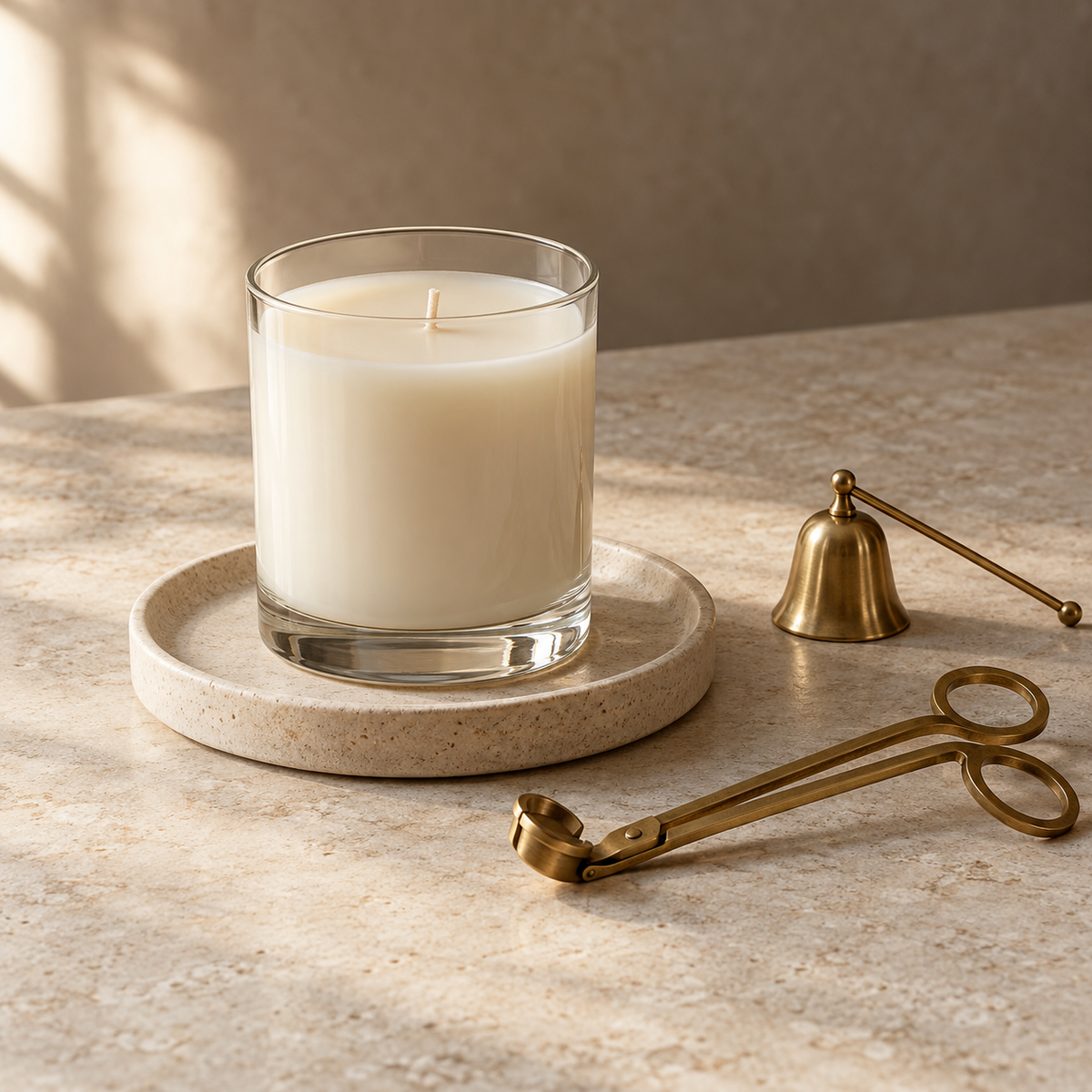
Use a suitable candle snuffer and check that both the flame and glowing wick are fully out. Never use water to extinguish a candle.
Let the wax and holder cool completely before moving them. Store the candle upright in a cool, dry place, away from sunlight and heat.
The stopping point
Leave a little wax. Keep a little distance.
Stop earlier whenever the product label requires it.
-
01
Jar and ceramic candlesUse only the original vessel intended for the candle. Stop at its marked minimum wax level; for an ordinary container candle without a higher stated limit, leave at least 1.3 cm of wax. Never let the flame heat an empty vessel.
-
02
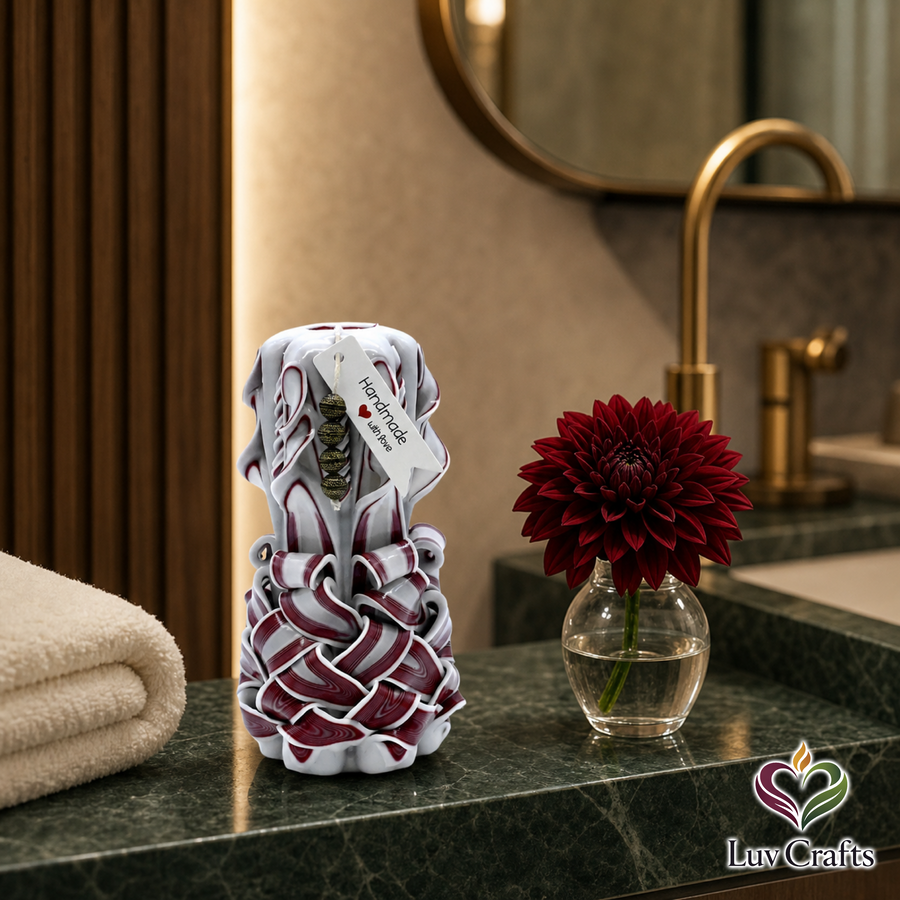
Pillars and tapersUse a holder that fits securely. Extinguish before the flame comes within 5 cm of the holder or any decorative material. Do not let the candle burn down into its holder.
A different candle · A different routine
Keep the right care guide close.
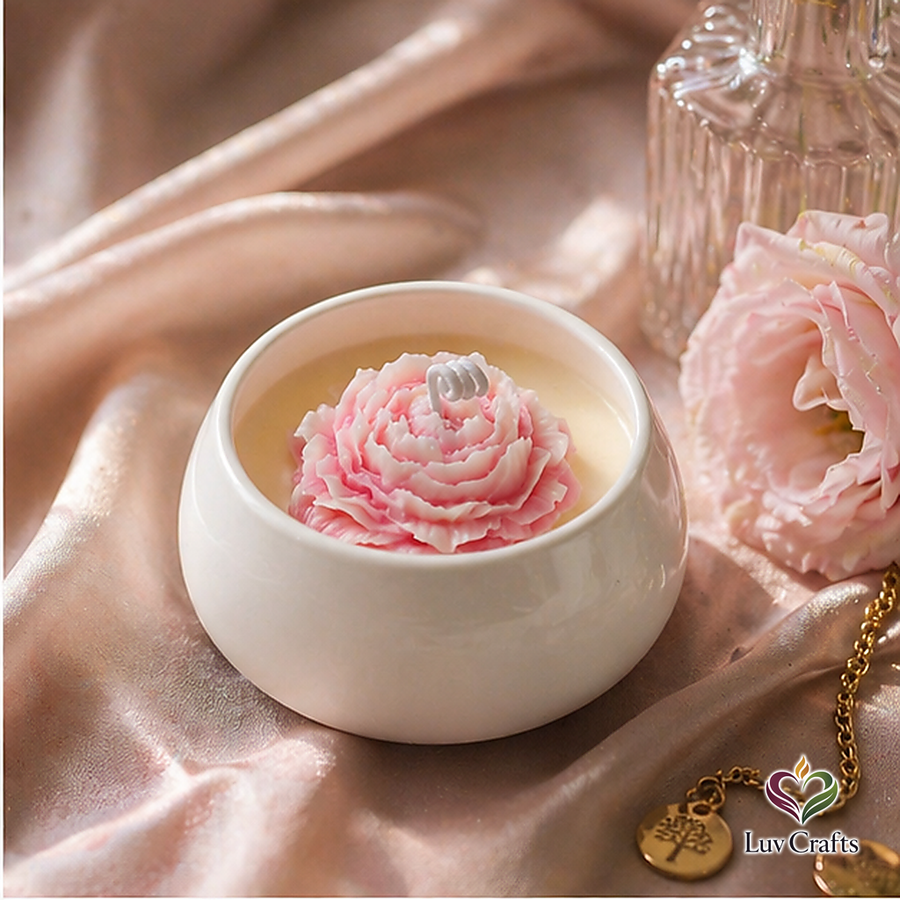
Floral arrangements and decorative candles need their own product instructions. Never burn a complete bouquet or Blossom Frame. A flower supplied without a wick is for a suitable wax melter only; do not add a wick yourself.
AI-generated illustrations show general care techniques, not specific Luv Crafts products. General references: National Candle Association and Kidde.
Continue through the Journal
A related thought, waiting nearby.


The conversation
What would you like to know about candle care?
0 thoughts shared
Share a question about everyday candle care. For an urgent safety concern, contact the appropriate emergency service.